
Jesup Gallery
October 9 through December 16
Essay by Ellen Naftalin
In the 1960s and 70s, in the U.S., across the Atlantic, and all over the world, American Blues became known to a young audience. The face of popular music changed as the old and the new became accessible on 45s and 33 RPM albums.
Here in Westport, Sally White had a record nook in Klein's Bookstore on Main Street. As a devoted blues and jazz lover, she played the albums of the artists who had come up in the south in the 1930s and '40s, alongside the new young musicians and bands following in their footsteps. I remember the first time I heard the Butterfield Blues Band in 1966. It was on the loud speaker in Kleins. I was 16. Little did I know that I would one day marry the keyboard player, Mark Naftalin.
Beyond Westport lay the mysterious land of San Francisco. There, a great resurgence of the blues was occurring because of impresarios Bill Graham and Chet Helms. Their visionary approach to music events was to pair the likes of B.B. King, Muddy Waters, and other top stars of the Blues world, with groups like the Butterfield Blues Band, Big Brother, and The Doors at venues like Filmore West, Winterland, and the Avalon Ballroom. This was also happening at smaller clubs around the Bay Area and served to draw a young audience who then were exposed to the origins of the music.
At the same time, a young Janis Joplin sang her heart out on "Ball & Chain" by Big Mama Thornton at the Monterey International Pop Festival, produced by Lou Adler in 1967, thus exposing an audience of between 7,000 to 10,000 to a new form of music that had been born nearly half a century ago. After all, blues is the bottom line of American music.
Despite the far-reaching effect of the recordings, the musicians participating were mostly a close-knit group. Many of the same musicians played on multiple recordings and in multiple groups as the bands split apart and reformed. It was a heady time and place for musical experimentation.
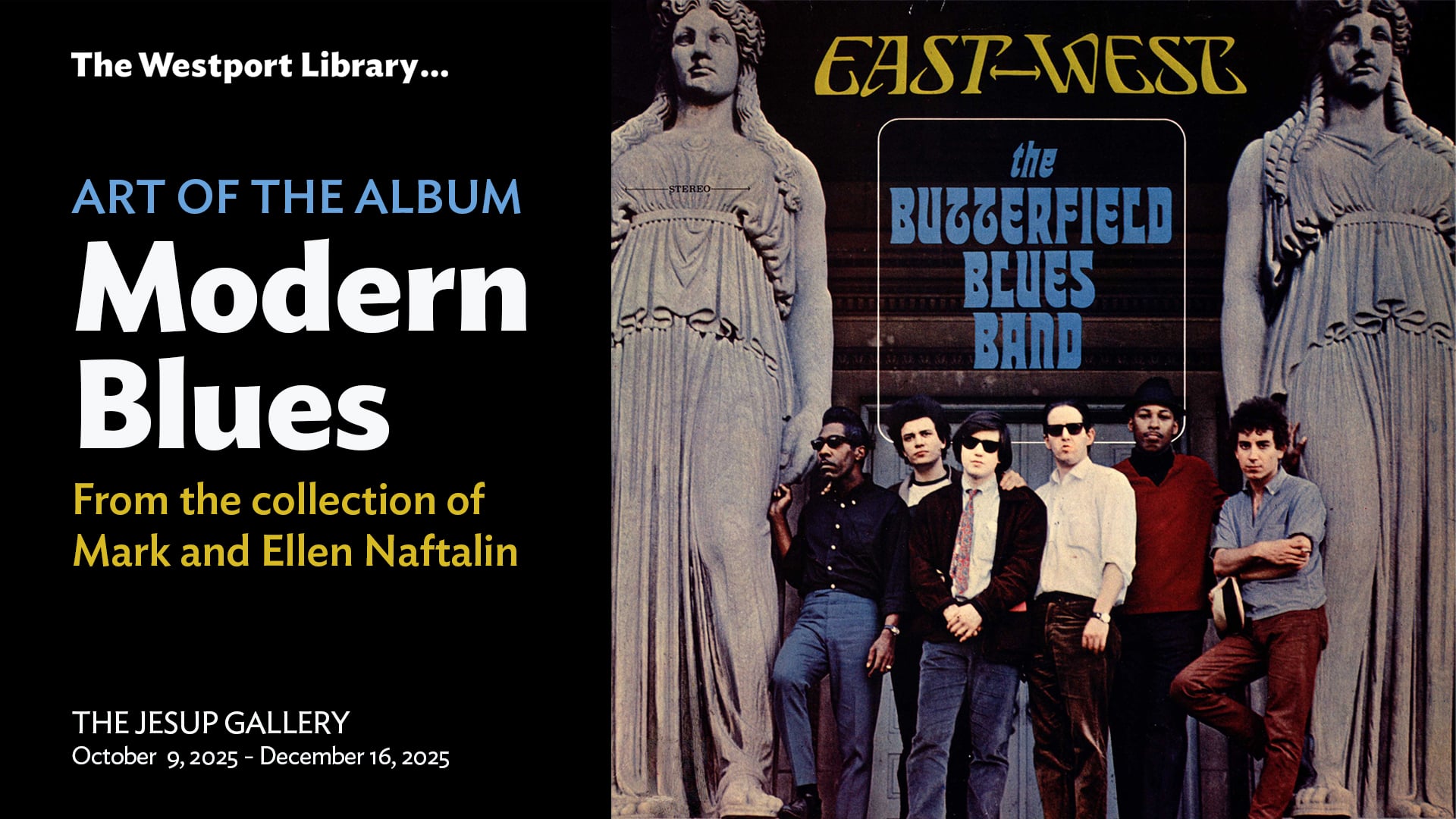
This exhibit consists of some of the many records on which Mark Naftalin played keyboards. The artists who designed the album covers are credited wherever possible as are the band members.
Records like Mother Earth and East West have become classics. Brewer and Shipley's "One Toke Over The Line," a Top 10 hit at the time, became an anthem for the young baby boomers' resistance.
The advent of CDs and digital music had not yet arrived, so album covers and their design became an art form, much like the posters for events of the time.
These days, any of these and other albums can be heard on YouTube. The Art of the Album Cover was soon to become a thing of the past, but the music lives on.
Thank you to Ellen and Mark Naftalin for digging though their treasure trove of LPs and sharing this piece of unforgettable American recording history.
***
For more about the Library art exhibits, visit the Art at the Library page.