

- This event has passed.
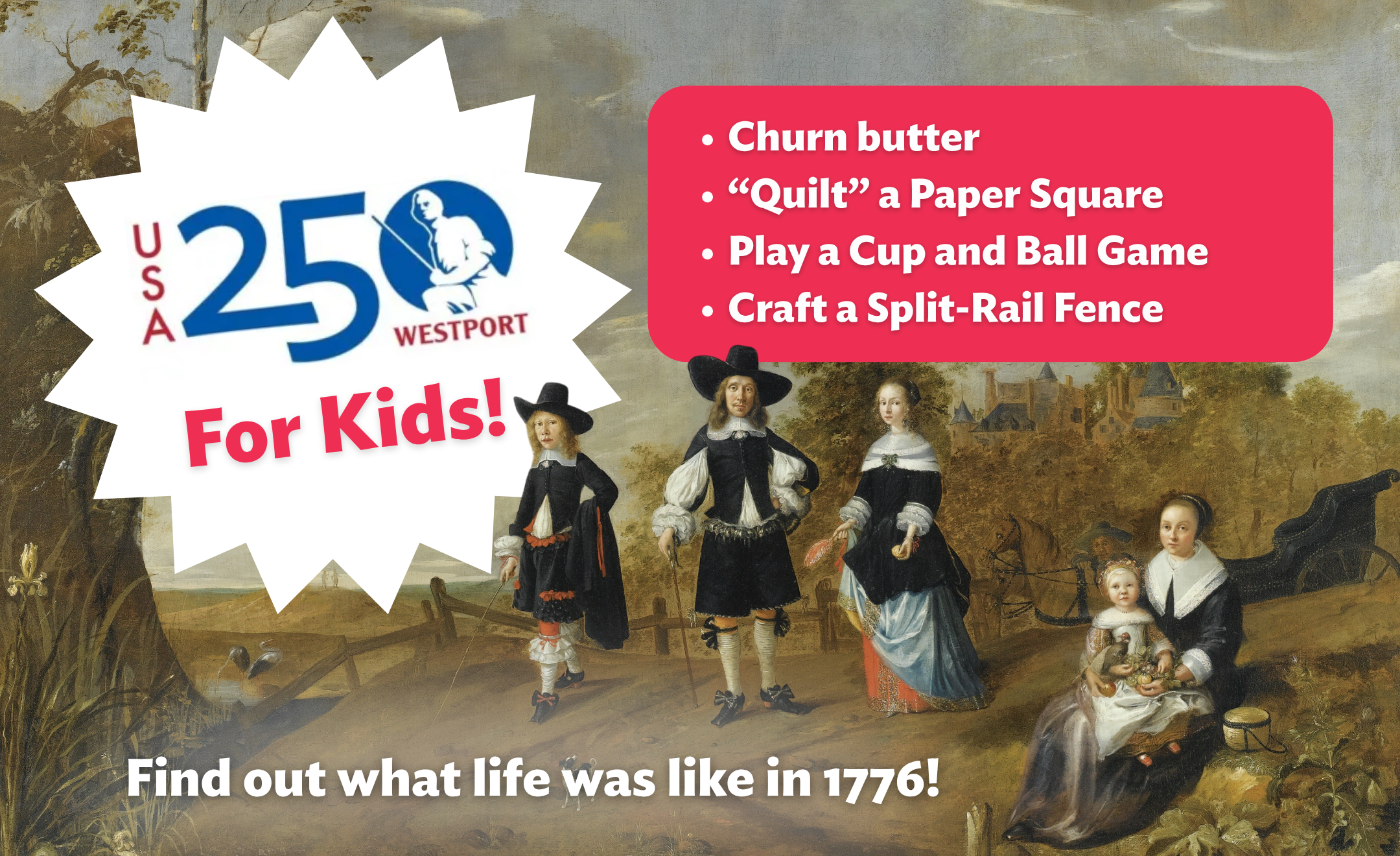
Celebrate America 250 in the Children’s Library!
Higgins Room
June 29 - July 2
Step back in time with us! Have you ever wondered what life was like for children in Westport in 1776? Throughout the week, we'll explore daily life in colonial Connecticut through a series of hands-on activities inspired by the games, crafts, foods, and skills that were part of children's everyday lives. Join us as we experience history the way a young colonial child might have lived it!
Monday, June 29
Food Colonial Children Might have Eaten: Butter!
Children would have taken part in the making of butter in households. Learn how to churn butter with us!
Tuesday, June 30
Craft-Quilting a Paper Square
Children frequently helped make quilts in Colonial England and early America. As part of a proper education, young girls were taught to sew early on, starting with simple piecing designs. This project involves printing a 1”x1” grid on a square piece of paper. Then, participants can cut colored paper squares to create a design. The “quilt squares” can either be taken home or they can be contributed to make a community quilt.
Wednesday, July 1
Cup and Ball Game!
Children in colonial England (and the American colonies) actively played with the cup and ball game. It was a popular, easily accessible pastime used to test hand-eye coordination and was played by both children and adults across all social classes.
Thursday, July 2
STEAM Activity: Making a Split-Rail Fence
In the American colonies, early settlers used fences primarily for agricultural purposes. Split rail fences, made from logs or timber, were common and provided a straightforward method for enclosing farmland.
For this open-ended stem activity we can supply materials, and children can make the split rail fences and then even play with them with toy animals.
Related Events

The Westport Library is committed to intellectual freedom, inclusivity, and lifelong learning. Our mission is to provide welcoming spaces for the free exchange of ideas. The Library does not endorse or condemn points of view, including any program content or the views expressed by presenters or participants.